
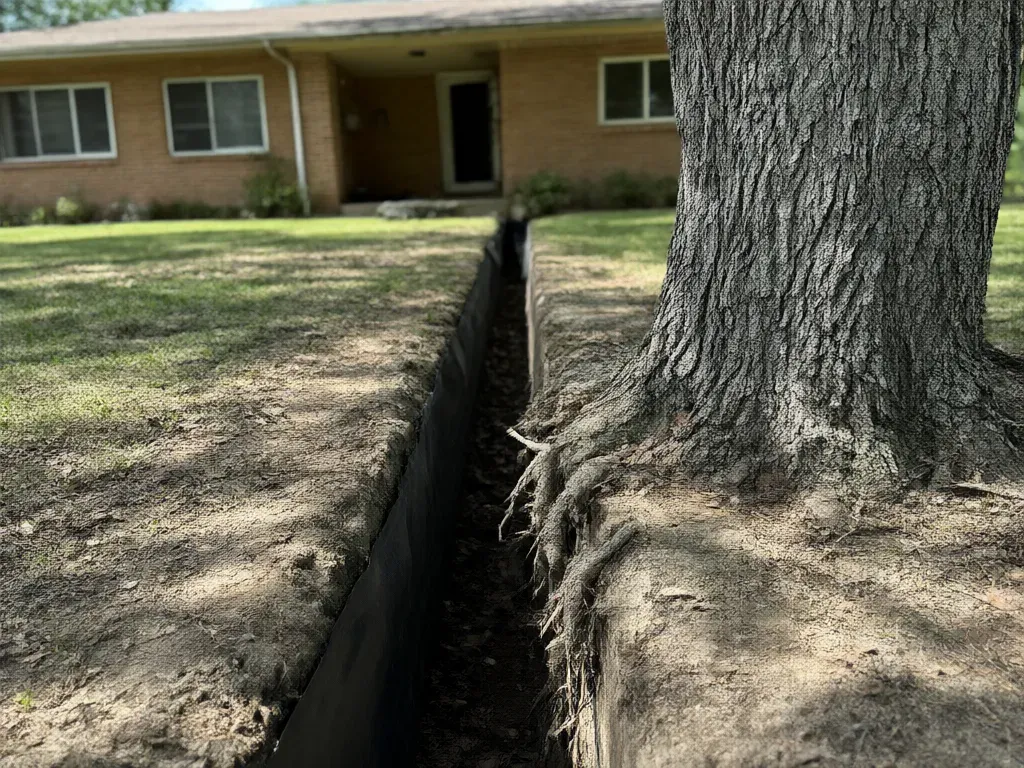
Root Barrier Installation in North Richland Hills, TX
North Richland Hills Superior Foundation Repair offers professional root barrier installation in North Richland Hills, TX, cutting off tree roots before they dry out the clay under your foundation. We trench between the tree and the house and set 60-mil HDPE panels 36 to 48 inches deep, with the top edge 2 inches above grade so roots can't climb over. Root barriers run $28 to $45 per linear foot and carry a 10-year warranty against roots growing through.
A big live oak, pecan or cedar elm can pull water out of the clay faster than summer rain puts it back, and the soil under the nearest corner of the slab shrinks with it. A tree root barrier lets you keep the tree and protect the foundation. We pair it with piers when the corner has already dropped, and we recommend an arborist's opinion before cutting roots on a large tree.
Get a FREE Estimate
Or call (817) 918-8523
Root Barrier Options
The right option depends on the tree, how close it stands and whether the corner has already dropped.
Root Barrier Installation for Mature Trees
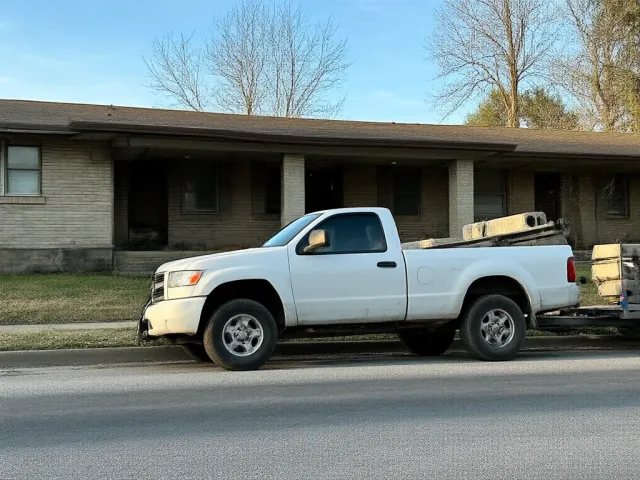
On one house, a big live oak stood about 9 feet off the back corner, and the corner dropped a little more every dry summer. After an arborist signed off on the cut line, the crew set pilings on the corner and a 48-inch-deep barrier between the tree and the slab. The tree stayed and the corner stopped moving.
Root Barrier Installation with Foundation Piers
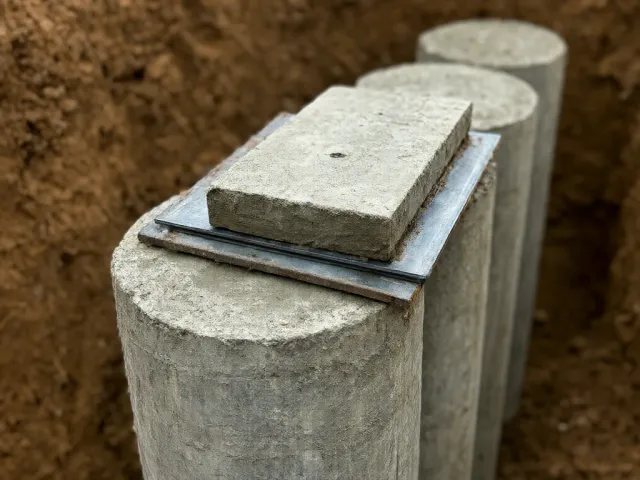
If the corner has already dropped, a barrier alone won't bring it back up. The engineer's letter calls for piers on the low side, and the barrier goes in during the same visit so the soil under the new piers isn't fighting the tree.
Root Barrier Installation for New Plantings
Planting a shade tree near the house? Setting the barrier before the roots arrive is the cheapest root work you'll ever do. We can put it in when the bed is dug, before the tree goes in the ground.
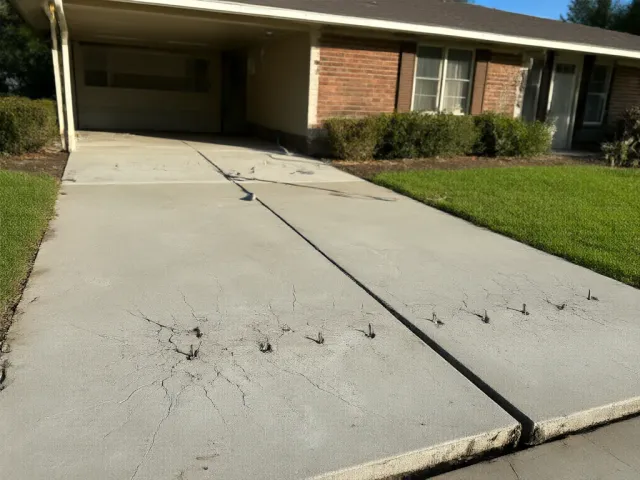
Root Barrier Installation Along Driveways and Walks
Roots that heave a driveway or sidewalk will keep doing it after the concrete is replaced. A barrier along the edge of the new pour protects the flatwork as well as the house.
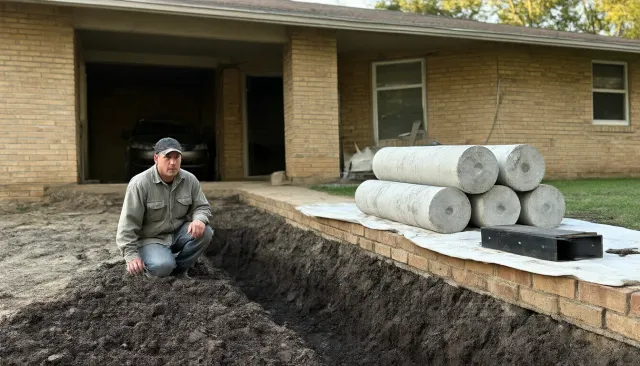
Root Barrier Alternatives: Pruning and Removal
The ASCE Texas Section guideline lists periodic root pruning as an alternative to a barrier, and tree removal as a last resort. We'll talk through all three, including why removal can backfire.
How Tree Roots Move a Foundation
People picture roots lifting a slab. That happens to sidewalks, but under a house the damage usually runs the other way. Feeder roots spread under the edge of the slab and pull water out of the clay, and the dry clay shrinks.
The corner nearest the tree loses support and drops, usually a little more each summer. Cracks on that side open in August and only partly close over winter, so they creep wider year after year.
Thirsty species make it worse, and the long Texas dry spells make it worst of all. The ASCE guideline says plainly that trees or large shrubs near a foundation may cause soil shrinkage under it. Live oaks, pecans, cedar elms and post oaks are the trees we find most often beside the corners that move.
Why We Don't Just Tell You to Cut the Tree Down
A mature shade tree is worth keeping. It cools the house and it's part of why the lot looks the way it does. Taking it down isn't free either, and it can cause a new problem.
When a big tree that predates the house comes out, the clay it was drying can swell back up for a while. The ASCE guideline warns about that heave and recommends a waiting period before any lifting. That can leave you with a corner going up instead of down.
A barrier cuts the roots off from the slab and leaves the rest of the tree's root system alone. That's why we recommend an arborist look first, so the cut line doesn't take more of the tree than it can spare.
How We Install a Root Barrier
Every job starts with a Texas811 utility locate, called in at least 48 hours before digging, not counting weekends and holidays. Gas, water and cable lines often run right where a barrier needs to go.
We lay out the line between the tree and the house, trench it 36 to 48 inches deep, and cut the roots clean at the trench face. The 60-mil HDPE panels go in with overlapped seams and the top edge left 2 inches above grade.
The trench gets backfilled and compacted, and the bed or sod goes back on top. Most runs up to 60 feet take 1 day, and you get a sketch of where the barrier sits for your records.
If a sprinkler line crosses the trench, we reroute it so no spray head ends up watering the slab side of the barrier. Otherwise the barrier keeps the roots out while the irrigation keeps the clay swelling on one side.
Signs a Tree Is Working on Your Foundation
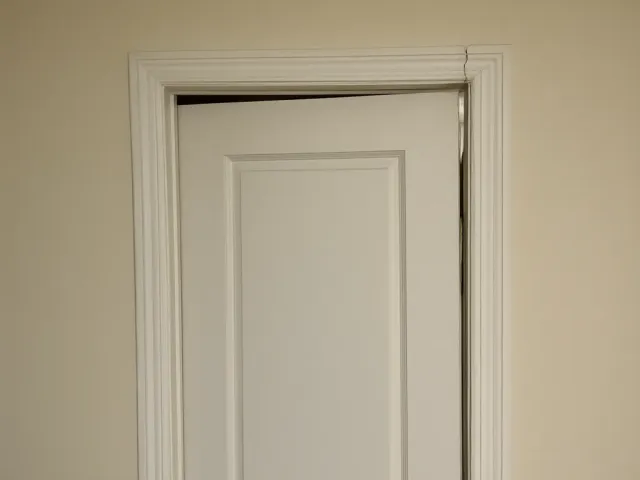
Cracks on the side of the house nearest a big tree that open wider every summer are the first sign. Look for stair-step cracks in the brick and doors on that side that stick in August.
Outside, you may see the soil pulling away from the grade beam in a gap, or roots surfacing in the bed along the house. A floor survey usually shows the low spot centered on the corner closest to the trunk.
If that sounds familiar, call before you call the tree service. Root work, piers and drainage can all be planned together so you only dig once.
Keep the Tree, Protect the Slab
Call (817) 918-8523 and ask for a free inspection. We'll survey the floor, look at the tree and give you a written price for the barrier and anything else the house needs.